The Nottingham Podcast Studio That Edits While You Record (Yes, Really)
Or: how I learned to stop worrying and love the live edit
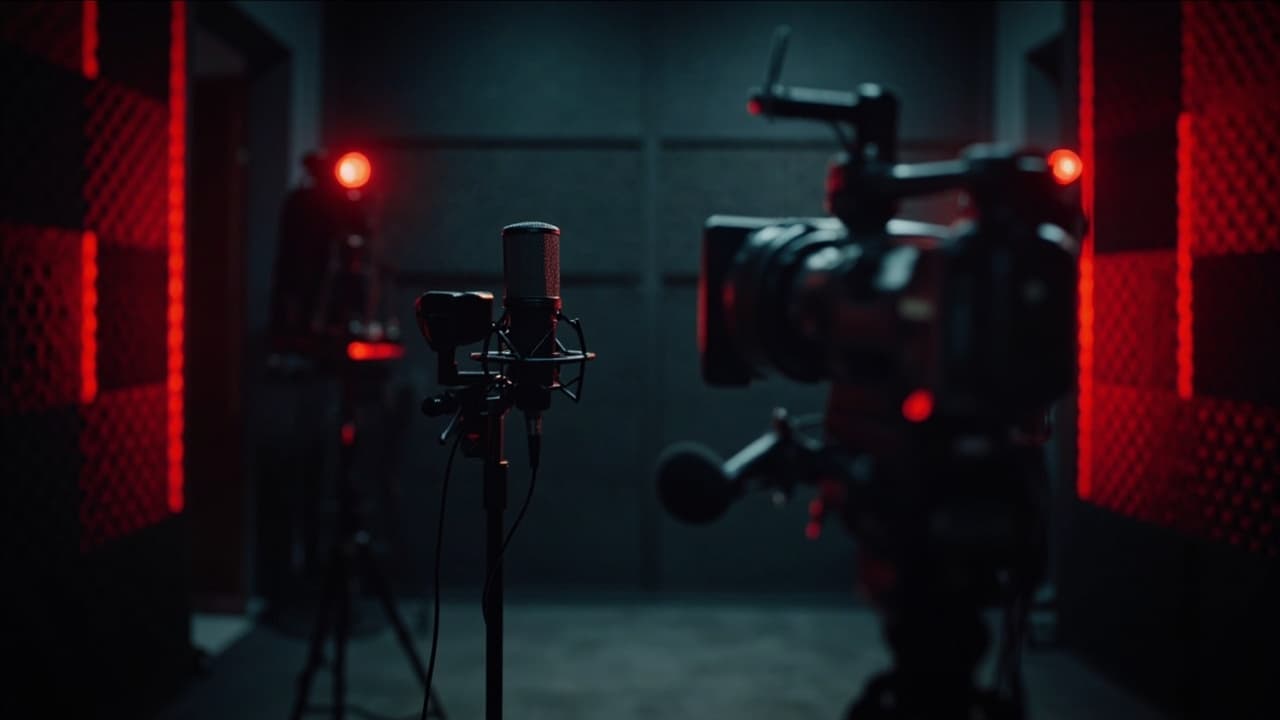
Walk out with finished content. No editing queue. No revision cycles.
Table of Contents
Let me tell you about the most magical phrase in podcasting. It's not "we'd like to sponsor your show." It's not "you've gone viral." It's not even "your download numbers are incredible."
It's this: "That's a wrap. Your content is ready."
Not "that's a wrap, now spend six hours editing." Not "that's a wrap, I'll send you the files tomorrow." Just: done. Finished. Walk out with publish-ready content.
This is what live editing means. And it's the single biggest competitive advantage in podcast production today. Which is convenient, because it's also the thing that almost nobody else is doing.
The Traditional Podcast Production Nightmare
Here's how podcast production normally works:
Step 1: Recording (2 hours)
You show up at the studio. You record your episode. The engineer gives you a thumbs up. You feel good about life.
Step 2: The Waiting (24-72 hours)
The studio sends your files to an editor. The editor puts you in their queue. You wait. Maybe you get a rough cut in 24 hours. Maybe it takes three days.
Step 3: The Revision Cycle (2-5 days)
You get the edit back. It's... fine. But they cut that story you really liked. And there's a weird noise at 23:47 that nobody noticed. You send feedback. You wait again.
Step 4: The Final Polish (1-2 days)
You approve the edit. Now it needs mixing and mastering. Another day passes.
Step 5: Publication (Finally)
Your episode goes live a week after you recorded it.
The Cost of Traditional Production:
- Total time from recording to publication: 5-10 days
- Total mental overhead: Significant
- Total enthusiasm remaining: DEAD!
The Live Editing Revolution
Now let me tell you how it works with live editing:
Step 1: Recording (2 hours)
You show up at the studio. While you're recording, the engineer is mixing the audio in real-time, balancing levels, applying EQ and compression. Multiple cameras are capturing different angles. The engineer is switching between camera feeds live.
Step 2: The Live Edit (Happens during Step 1)
While you're recording, the engineer is also editing. They're cutting out the false starts, the "ums" and "ahs." By the time you finish recording, the edit is already 80% done.
Step 3: The Final Polish (30 minutes)
You take a break. You have a coffee. The engineer does a final pass.
Step 4: Walk Out With Content (Immediate)
You leave the studio with finished files. Audio podcast: ready to upload. Video podcast: ready to publish.
The Live Editing Advantage:
- Total time from recording to publication: 2-3 hours
- Total mental overhead: Minimal
- Total enthusiasm remaining: High
This is not a marginal improvement. This is a fundamental transformation.
Why Live Editing Changes Everything
1. The Feedback Loop
When you record traditionally, you don't hear the final mix until days later. By then, you've forgotten the context. You can't remember why you paused at 14:23.
With live editing, you hear the mix as it happens. You can adjust your performance in real-time. If the levels are wrong, you know immediately. You're not guessing whether something worked - you're hearing it work.
2. The Energy Preservation
Podcasting is energy-intensive. Traditional production then requires you to revisit that same energy days later, when you're in a completely different mental state.
Live editing preserves your creative energy. You record, you review, you approve, you move on. The mental load of production doesn't hang over you for days.
3. The Iteration Speed
Here's something they don't tell you about successful podcasts: they're iterative. The first 10 episodes are experiments. You need to be able to try things, evaluate them, and adjust quickly.
Traditional production makes iteration painful. Your learning cycle is measured in weeks.
Live editing compresses that cycle to hours. You can evolve your format week by week instead of month by month.
4. The Content Multiplication
Remember the content stack? One recording session that produces multiple pieces of content?
While you're recording, the engineer can be:
- Switching between camera angles for the main video
- Marking timestamps for social media clips
- Capturing B-roll of the recording process
- Creating real-time audiograms
By the time you finish recording, you don't just have a podcast episode. You have the full video podcast, 3-5 short-form clips, 5-10 audiograms, and behind-the-scenes content.
Why Almost Nobody Else Does This
If live editing is so great, why doesn't every studio offer it? Three reasons:
1. It requires expensive equipment. A live editing setup needs professional audio mixers, video switchers, multi-track recorders. This is £30,000+ of equipment, minimum.
2. It requires skilled engineers... (content continues)
The Nottingham Advantage
Here's the thing about Nottingham: it's underserved. London has dozens of podcast studios, most offering traditional post-production. Manchester has several. Birmingham has a few.
Nottingham has... almost nothing. There's us, and there's a handful of music studios that don't understand podcasting. The market is wide open.
The Bottom Line
Live editing is the future of podcast production. It's faster, better, and more sustainable. The only reason it's not universal is that it's technically difficult and expensive to implement.
But you don't need to implement it. You just need to find a studio that has.
Ready to experience live editing?
Book a session at StreamToday Studios. Walk in with ideas, walk out with finished content. No editing queue. No revision cycles. No waiting.
Book Your Session →Related Articles
StreamToday Studios
Nottingham's premier podcast studio with live editing. We help creators produce professional content without the technical headaches.